Whale watching in Punta Cana isn't really in Punta Cana.
The humpback whales people come to see every winter are usually found around Samaná Bay on the northeastern side of the Dominican Republic. So when you book whale watching in Punta Cana, you're normally booking a full-day trip to Samaná rather than a quick boat ride from the resort area.
That's not a bad thing. In fact, for a lot of travelers it's one of the highlights of the entire trip.
It just helps to know that before you book it.
A surprising number of people picture a couple of hours on a boat followed by an afternoon back at the pool. Then the pickup time arrives, the transfer starts, and suddenly they're discovering that whale watching in Punta Cana is actually a proper day out.
The good news? Once you know what to expect, it's much easier to decide whether it's worth it for your trip.
Quick answer: is whale watching in Punta Cana worth it?
For a lot of travelers, yes.
Seeing humpback whales in the wild is one of those experiences that's genuinely hard to compare to anything else. Photos don't quite capture the scale, and videos don't prepare you for the moment a whale surfaces beside the boat and everyone suddenly stops talking.
That said, it isn't the right excursion for everyone.
If you're happy trading a relaxed resort day for a wildlife experience you'll probably remember for years, it's absolutely worth considering. If your ideal vacation involves sleeping late, staying close to the beach, and avoiding long days with fixed schedules, there are better ways to spend your time.
As a simple rule:
Book it if wildlife is a priority.
Skip it if you're looking for something quick and effortless.
Think twice if you struggle with severe seasickness.
If you're after a beautiful day on the water without the early start and longer itinerary, a Saona Island day trip with lunch and open bar is often a better fit. You won't get the whales, but you will get crystal-clear water, white-sand beaches, and a much slower pace.
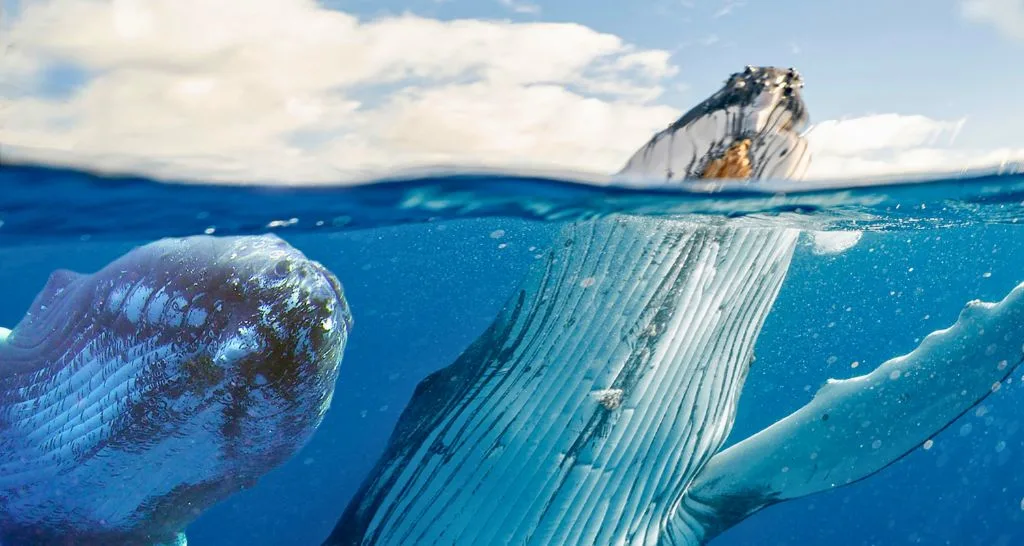
Can you see whales from Punta Cana?
Not reliably.
This is the biggest booking misunderstanding. Reliable whale watching Dominican Republic, Punta Cana excursions head toward Samaná because those are where the seasonal sightings, guides, boats, and routes are centered.
Could a whale move through wider Dominican waters during migration? Sure, but whale watching in Dominican Republic waters works best in the right seasonal area, which usually means Samaná.
If a tour makes it sound like you’ll leave from Bavaro, spot whales near the swim-up bar, and still make lunch at the hotel, read the details twice.
Why Samaná Bay is the main event
Samana Bay whale watching is popular because humpbacks gather there in winter to mate, give birth, and nurse calves. You’re entering a seasonal whale nursery, not just taking a boat ride to stare at water with better branding.
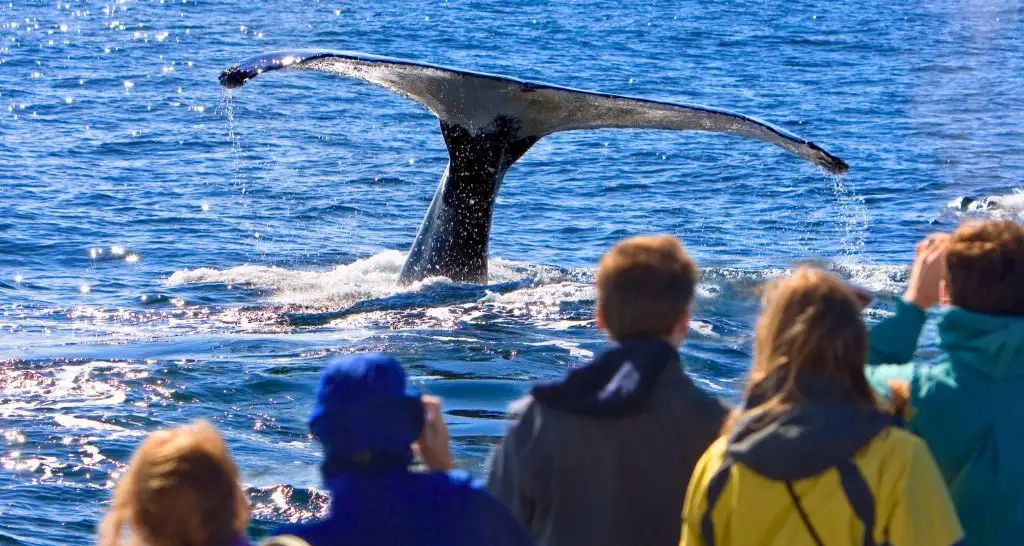
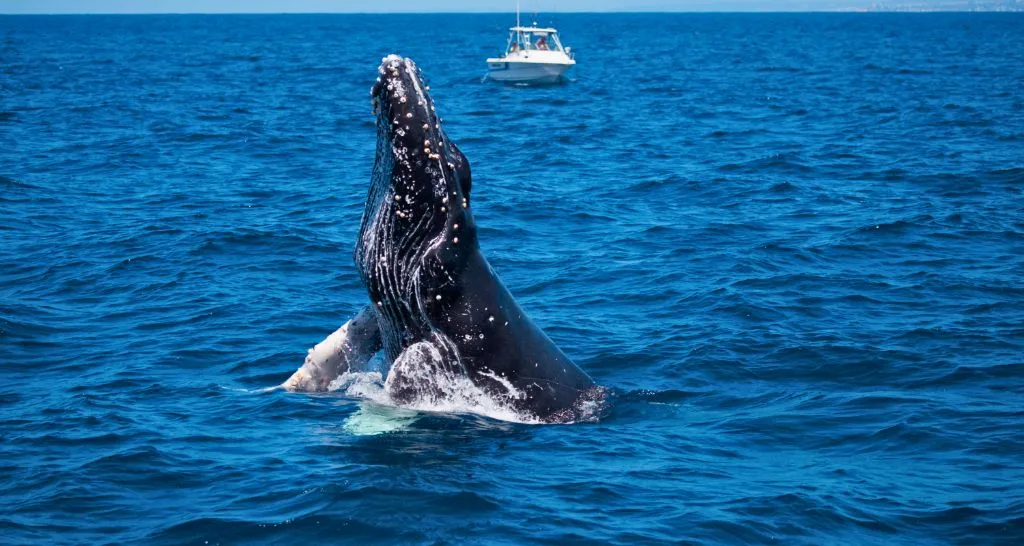
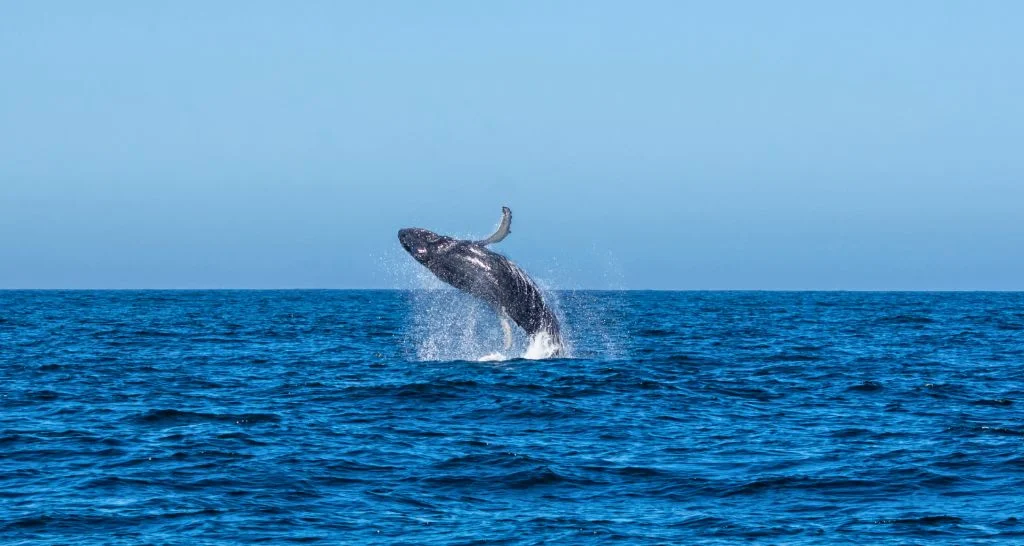
A good Samana Bay whale-watching tour can include blows, tail dives, rolling, pectoral fin slaps, mothers with calves, and sometimes breaches. The breach is the dramatic photo everyone wants, but no ethical operator can promise it.
Silver Bank is the more specialized whale option north of the Dominican Republic, with permit-controlled, multi-day, higher-cost trips. Samaná is the realistic choice for most Punta Cana travelers.
Best time for whale watching in Punta Cana
The best time for whale watching in Punta Cana is mid-January through March, with February generally offering the most reliable conditions for travelers planning their trip around whales.
Month | What to expect | Worth booking? |
January | Season begins building, especially during the second half of the month. | Yes |
February | Peak season with strong sighting opportunities and the busiest tour schedules. | Best month |
March | Still a good time to go, with a chance of seeing mothers and calves. | Yes |
April to December | Outside the standard whale watching season. | No |
If your travel dates are flexible, February is usually the safest choice. January and March can still be excellent, but whale activity is generally less consistent than during the peak of the season. If whale watching is one of the main reasons you're visiting the Dominican Republic, it's worth booking ahead, especially for February departures.
How whale watching tours from Punta Cana work
Most whale watching Dominican Republic Punta Cana tours start early.
Not because tour operators enjoy ruining vacations, but because there's a fair amount of ground to cover before you reach the whale-watching area.
In most cases, you'll be picked up from your hotel in Punta Cana and travel toward Samaná or Sabana de la Mar. From there, you'll board a boat and head out into the waters around Samaná Bay, where humpback whales gather during the season.
After the whale-watching portion of the day, many tours include lunch and a stop at Cayo Levantado, often called Bacardi Island, before returning to Punta Cana later in the afternoon.
The biggest thing to understand is that whale watching in Punta Cana is usually a full-day excursion. Most tours take somewhere between eight and 12 hours from pickup to drop-off, depending on the operator, transfer route, sea conditions, and what's included in the itinerary.
That's why it's best not to book it on arrival day, departure day, or the same evening as the dinner reservation you've already built an outfit around.
If you'd rather spend less time in transit on another day, the ATV adventure to a water cave and Macao Beach is a much easier excursion to fit into your schedule.
Which tour type should you choose?
For most travelers, a mid-range shared tour is the sweet spot.
You usually get hotel pickup, whale watching, lunch, and a beach stop without paying premium prices. Unless you're celebrating something special or really hate crowds, it's often the best balance of cost and convenience.
Budget tours can save money, but they often come with bigger groups, longer waits, and a less comfortable day overall. Private or premium tours are worth considering for families, photographers, older travelers, or anyone who'd rather pay extra and deal with fewer moving parts.
You may also see flight-assisted or helicopter-style options. They're faster, more expensive, and generally unnecessary unless your budget is considerably more flexible than most people's.
Whatever you choose, don't compare tours on price alone. For whale watching Dominican Republic Punta Cana excursions, it's worth checking what's actually included, how long the day is, whether lunch is provided, and how much time you'll spend on the water.
If you're still deciding which excursions deserve a spot on your itinerary, TourDaddy's Punta Cana excursion guide to what’s worth booking and what to skip can help narrow things down.
Who should book it, and who should skip it?
Whale watching is one of those excursions that's either a highlight of the trip or something you're counting down the minutes to finish.
If you're a wildlife lover, photographer, couple looking for something memorable, or a family with older children, there's a good chance you'll enjoy it. Seeing humpback whales in their natural environment is very different from watching a video or spotting something in the distance from shore.
It can be a tougher sell if you're traveling with toddlers, struggle with motion sickness, hate early mornings, or only have a few full days in Punta Cana. Whale watching isn't difficult, but it is a long day.
Families usually have the best experience when they keep expectations simple. Whale watching, lunch, a beach stop, and back to the resort is more than enough. As the official Dominican Republic whale watching guide explains, Samaná's humpback whale season is one of the country's most popular nature experiences, which is exactly why many visitors are willing to dedicate an entire day to it.
What does whale watching in Samaná Bay look like?
One of the biggest misconceptions about whale watching is that whales spend the entire trip launching themselves out of the water.
Sometimes that happens. Most of the time, it doesn't.
A typical sighting often starts with a blow in the distance. The boat slows, people start pointing, and before long you're watching a whale surface, roll, or lift its tail before disappearing beneath the water again. On some days you may see mothers traveling with calves. On others, you might be lucky enough to witness a breach or a dramatic pectoral fin slap.
If you're wondering what all those behaviors mean, NOAA's humpback whale behavior guide explains the surface displays whale watchers commonly see, from tail slaps and spyhops to full breaches.
The reality is that most whale-watching trips are made up of lots of small moments rather than one giant spectacle, and that's often what makes the experience so memorable.
How much does whale watching in Punta Cana cost?
Most full-day whale watching in Punta Cana tours cost around $150 to $250 per adult when hotel pickup, transport to Samaná, the boat trip, a guide, and lunch are included. That range lines up with Punta Cana Adventures’ 2026 whale watching day trip guide, which is useful because it prices the trip from the same place most readers are staying: Punta Cana.
You may see cheaper prices if you’re only looking at boat tours from Samaná itself. For example, Whale Samaná’s published whale watching rates list a lower adult price for the boat portion, but that doesn’t include the full transfer from Punta Cana.
That’s the big thing to watch. A cheaper ticket isn’t always a cheaper day. Before booking, check whether the price includes hotel pickup, road or boat transfers, lunch, Cayo Levantado time, park or sanctuary fees, drinks, an English-speaking guide, and the weather or cancellation policy.
For whale watching Dominican Republic Punta Cana tours, the best value is usually the option that explains the full day clearly before you pay.
How to prepare for a full day of whale watching
Most people remember sunscreen. The things they forget are usually the ones that matter more six hours into the day.
A few items can make the experience noticeably more comfortable:
Water, especially if you're traveling during the warmer months
Sunglasses and a hat for long periods on the water
A lightweight cover-up for the boat, transport, and beach stop
Motion sickness medication if you're even slightly prone to seasickness
A waterproof pouch for your phone or camera
Swimwear and a towel if your tour includes Cayo Levantado
Cash for tips, drinks, or small purchases
The biggest mistake isn't forgetting a hat. It's treating whale watching like a quick excursion. Most tours involve transfers, time on the water, lunch, and several hours away from the resort, so a little preparation goes a long way.
If you're worried about seasickness, eat a light breakfast before departure and take any medication before boarding rather than waiting until you're already feeling miserable.
Why responsible whale watching matters
Most travelers don't think much about whale-watching regulations until they're already on the boat.
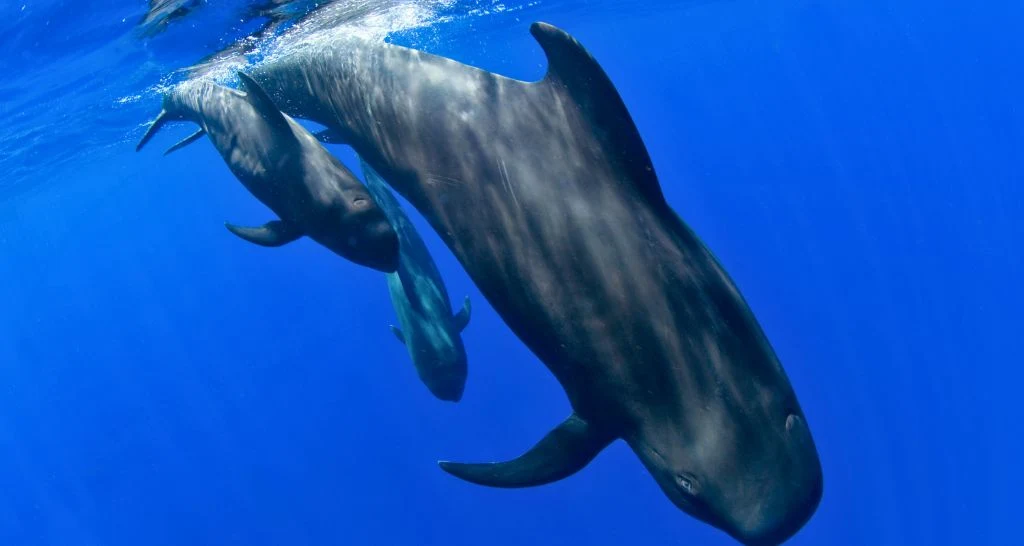
The reality is that Samaná Bay is one of the Caribbean's most important humpback whale breeding areas, which is why tour operators are expected to follow strict rules around how boats approach and interact with the animals.
That means you shouldn't expect captains to race after whales, cut them off, or position the boat directly on top of them for photos. In fact, those are usually signs of a poor operator rather than a good one.
The International Whaling Commission's Dominican Republic whale watching profile outlines many of the management measures used to protect whales in the area while still allowing visitors to enjoy the experience.
A good whale-watching trip should feel like you're observing wildlife on their terms, not watching a boat chase animals around the bay.
Is whale watching in Punta Cana worth it?
If you're hoping for a quick excursion between breakfast and the pool, probably not.
If you've ever wanted to see humpback whales in the wild, that's a completely different story.
The reality is that whale watching in Punta Cana takes more time and effort than many travelers expect. It's an early start, a full day out, and a fair amount of travel. That's also exactly why the experience feels different from most resort excursions.
Years from now, you're unlikely to remember another afternoon by the pool. Watching a humpback whale surface beside the boat is a lot harder to forget.
If you're visiting during whale season and the experience sounds like something you'd genuinely enjoy, it's one of the most rewarding day trips in the Dominican Republic.
Ready to start comparing options? Explore TourDaddy's selection of Dominican Republic tours to find excursions that fit your travel style, budget, and schedule.